
Why Does Your Business Need a Mobile App?
Think about how you use your smartphone every day. You shop online, book appointments, make payments, order food, and stay connected with your favourite brands through mobile applications.
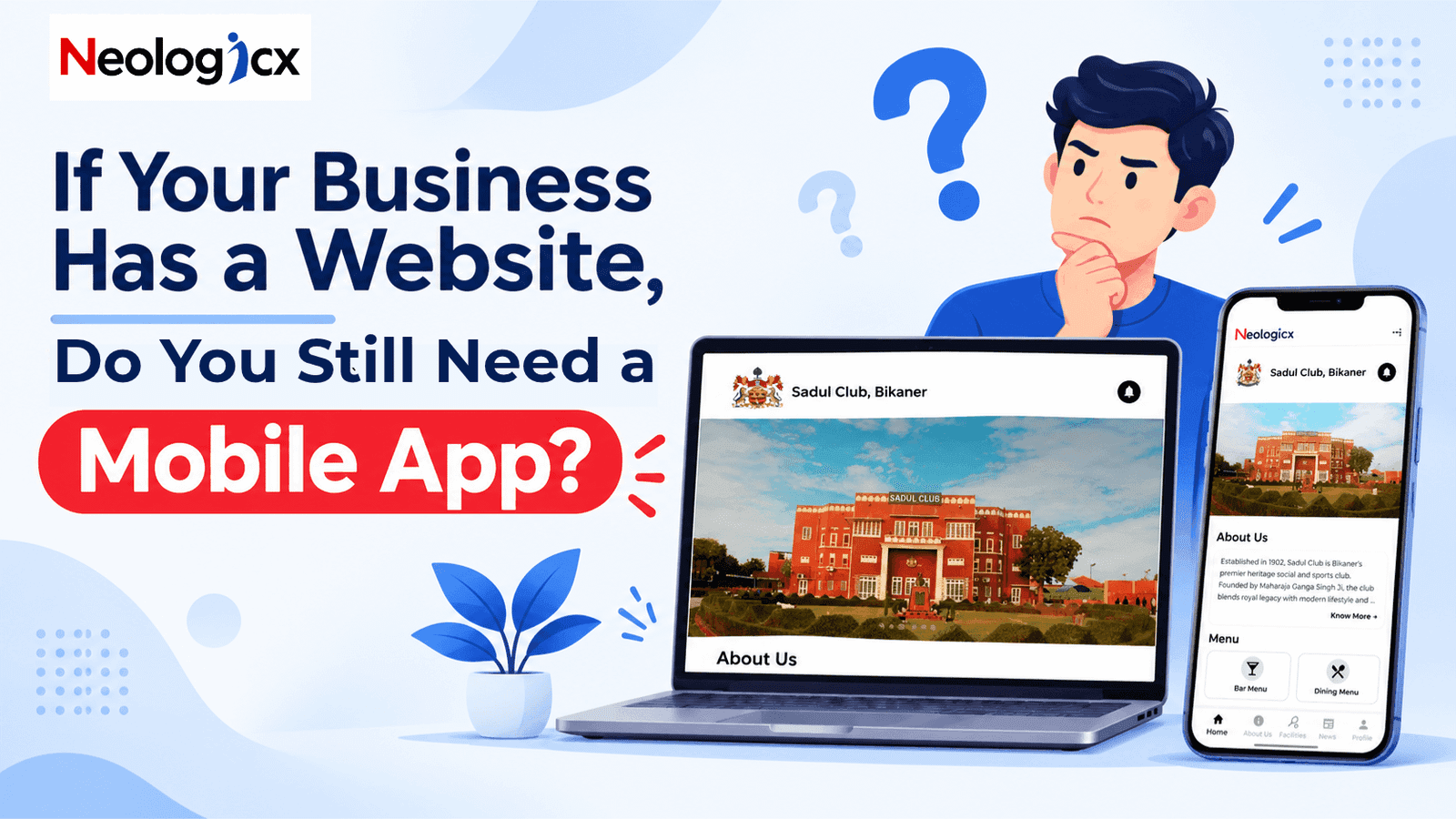
Think about how you use your smartphone every day.
You shop online, book appointments, make payments, order food, and stay connected with your favourite brands through mobile applications.
But here's an interesting question!
If websites can already handle online shopping, bookings, payments, and customer enquiries, why do businesses still invest in mobile applications?
Isn't having a website enough?
Well, not always!
A website is essential for building your online presence, reaching new customers, and making your business accessible. But a mobile application offers something different. It can integrate more deeply with a customer's smartphone, provide dedicated app experiences, and create additional opportunities for customer engagement.
Let's understand why your business might need a mobile application even if you already have a website.
1. Stay Connected with Customers Through Direct Push Notifications
One of the biggest advantages of having a mobile application is the ability to send push notifications directly to customers' devices.
Think about it!
Customers don't visit your website every day. So, how will they know when you launch a new product, introduce a special discount, or announce an exciting offer?
This is where mobile app push notifications make a difference.
With customer permission, your business can send timely updates directly to their smartphones, even when they aren't actively browsing your app.
For example:
- Exclusive Offers: Notify customers about special discounts and limited-time deals.
- New Product Launches: Announce newly available products or services.
- Order Updates: Share order confirmations, shipping updates, and delivery notifications.
- Appointment Reminders: Remind customers about upcoming bookings.
- Personalized Promotions: Share relevant offers based on customer preferences.
Websites can also support browser push notifications, but mobile apps provide a dedicated notification channel integrated with the smartphone's operating system.
Your business doesn't always have to wait for customers to visit. You get another opportunity to reach them directly!
2. Go Beyond the Browser with Native Mobile Features
A website operates inside a browser, whereas a native mobile application can integrate more deeply with the smartphone's operating system and hardware.
Modern smartphones come with several built-in capabilities that native apps can use to create more advanced experiences.
For example:
- Fingerprint and Face ID authentication.
- Bluetooth connectivity with supported devices.
- NFC-based functionality on compatible devices.
- Camera integration and advanced image processing.
- Motion sensors and other device capabilities.
Imagine a fitness business that wants to connect its application with wearable devices or a smart home company that wants customers to control connected devices through their smartphones.
A native application can make these integrations more seamless.
While websites can access some of these features too, native applications generally offer broader and deeper device integration.
3. Offer Useful Features Even Without an Internet Connection
Internet connectivity isn't always reliable.
Imagine a customer travelling through an area with poor network coverage who needs to access previously saved information from your business.
A website that depends on live server communication may not work as expected.
A mobile application, however, can store selected information directly on the device, allowing certain features to work offline.
For example:
- Access previously downloaded documents.
- View saved product information.
- Browse cached content.
- Access previously loaded data.
- Continue supported tasks and synchronize changes when the internet connection returns.
This can be particularly useful for businesses in logistics, travel, education, field services, and other industries where uninterrupted internet access isn't guaranteed.
With offline capabilities, your application can remain useful even when the internet doesn't cooperate.
4. Keep Your Business Just a Tap Away
Think about how many applications you open daily.
You probably don't search for each application on Google every time you want to use it.
You simply tap its icon on your smartphone.
That's another advantage of having a dedicated mobile application.
Once customers install your app, your business gets a permanent place on their smartphone's home screen.
You can also take advantage of supported operating-system features such as:
- Home-screen widgets.
- App shortcuts.
- Quick actions.
- Share-sheet integration.
- Live activities on supported devices.
For example, a food delivery application can offer quick access to recent orders, while a service application can provide shortcuts to frequently used features.
These capabilities help make your business more accessible within the customer's everyday smartphone experience.
5. Bring Back Customers Who Forget About Your Business
Customers often explore products, add items to their cart, or start a booking but leave without completing the process.
And sometimes, they simply forget about it!
A mobile application gives your business an opportunity to reconnect with these customers through automated push notifications.
For example:
- Remind customers about products left in their shopping carts.
- Notify users about incomplete bookings.
- Remind customers when their subscriptions are about to expire.
- Inform users when previously unavailable products are back in stock.
These timely reminders can encourage customers to return to your application and complete their actions.
Build Your Business Mobile App with Neologicx
Your website is an important part of your digital presence. But if you're looking to take customer engagement, smartphone integration, and personalized digital experiences to the next level, a mobile application could be your next step.
At Neologicx, we help businesses transform their ideas into custom mobile applications designed around their goals and customer needs.
Whether you run an e-commerce store, restaurant, startup, healthcare business, or service-based company, we can help you develop a mobile application with the right features and functionality.
From intuitive UI/UX design to custom mobile app development and advanced integrations, we focus on creating applications that deliver real value.
Don't just make your business accessible online. Make it a part of your customers' everyday mobile experience.
Ready to take the next step?
Connect with Neologicx, and let's build a mobile application that helps your business move forward!
📞 +91 94141 38694 / +91 94141 38620
FAQ (Frequently Asked Question)
1. What type of businesses should have their own mobile app?
Restaurants, retail stores, startups, eCommerce brands, and service-based businesses can benefit from mobile apps.
2. How much does it cost to develop a mobile app for a business?
Mobile app development costs depend on features, design, platform, and project complexity. Book your consultation today to get a clear cost estimate for your app.
3. Can a mobile app help a business grow faster?
Yes, an app can improve customer convenience, increase engagement, and create more opportunities for repeat business.
4. Can I get more sales through an app?
Yes, an app can make shopping easier and encourage customers to purchase more often.
Table of Contents
- 1. Stay Connected with Customers Through Direct Push Notifications
- 2. Go Beyond the Browser with Native Mobile Features
- 3. Offer Useful Features Even Without an Internet Connection
- 4. Keep Your Business Just a Tap Away
- 5. Bring Back Customers Who Forget About Your Business
- Build Your Business Mobile App with Neologicx
- FAQ (Frequently Asked Question)